Naval Officer E-Learning Platform
Naval Ecosystem Integration
Designing a unified operational environment for mission-critical naval systems
ROLE
: UX / Interaction Designer
SCOPE
: Integrated Bridge System (IBS) & Tactical Control.
CONTEXT
: High-risk, real-time decision-making under extreme conditions.
NOTE
: Interface layouts, control elements, and data values have been modified or
abstracted for security and non-disclosure purposes.
CONTEXT
CHALLENGES
MY CONTRIBUTION
CONTEXT
- System type: Integrated bridge system and Weapon system for autonomous vessels
- Environment: Navigation in stormy conditions and limited visibility.
- Objective: To reduce the cognitive load on the officer on watch during critical moments.
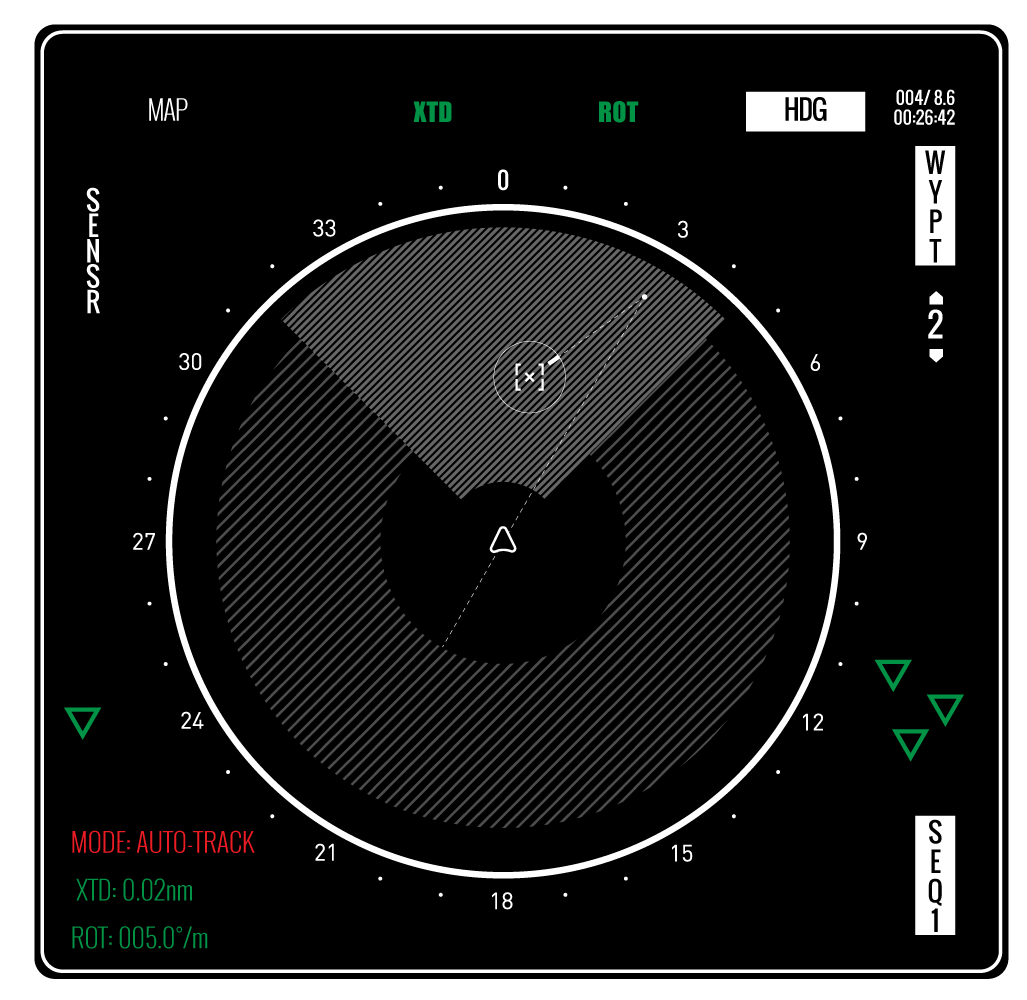
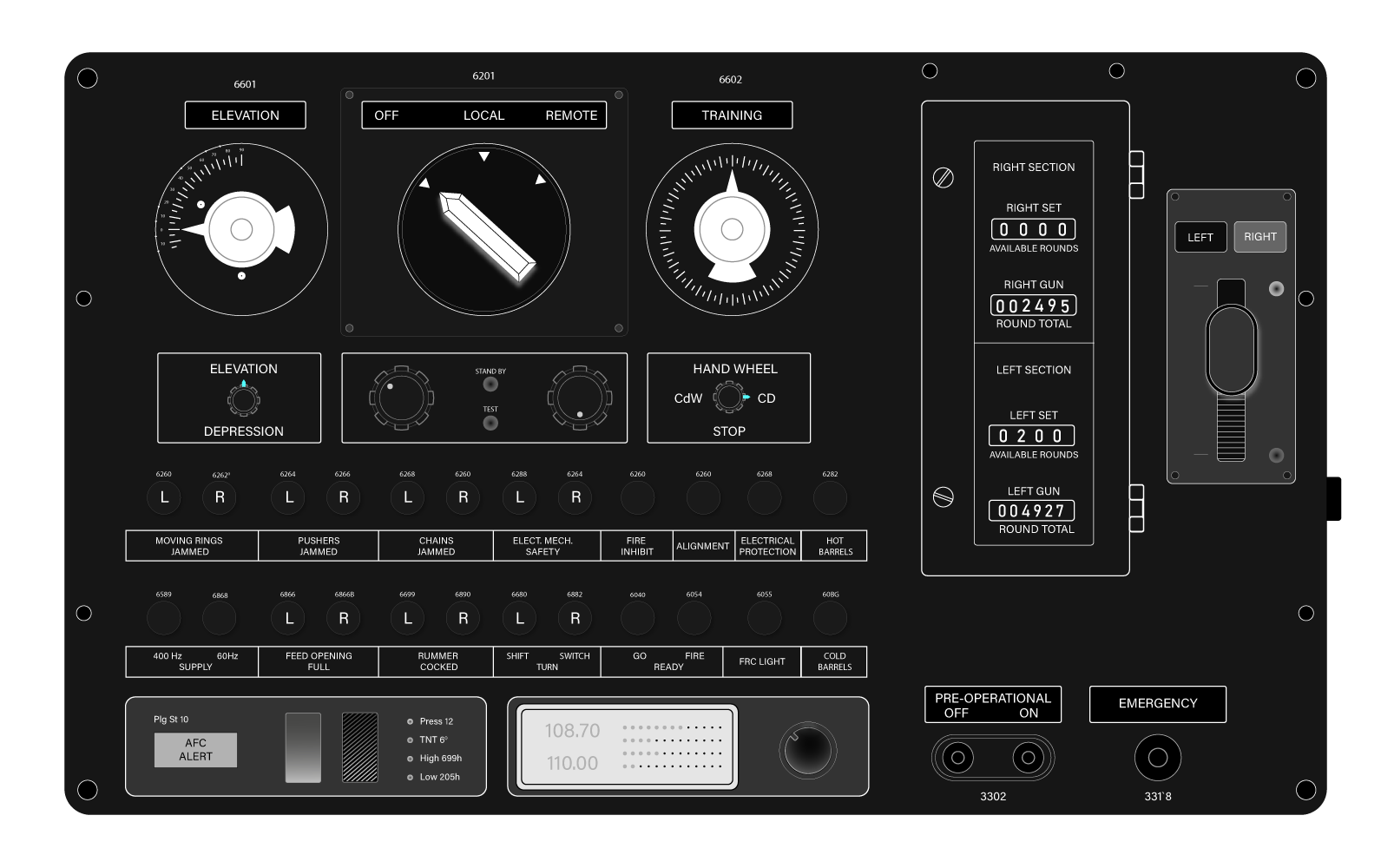
- Object: MFD (multifunctional displays) for navigation, safety, and tactical control.
CHALLENGES
- ● Information noise: Excessive data from dozens of sensors, the need to monitor multiple systems (engines, radars, depth) simultaneously.
- ● External factors: Ensuring usability under heavy pitching, screen glare, and constant hull vibration.
- ● Critical Latency: Ship inertia requires decisions to be made 5–10 minutes before collision.
- ● Standards: Strict adherence to IMO color coding standards.
MY CONTRIBUTION
- Information architecture: Designed adaptive structures to prioritize critical data and reduce cognitive load across navigation and tactical contexts.
- Interaction design & prototyping: Developed interaction logic and transitions between operational modes, ensuring continuity in high-pressure scenarios.
- Design system: Defined guidelines for low-visibility conditions.
- Validation: Tested interface readability and usability under simulated environmental conditions.
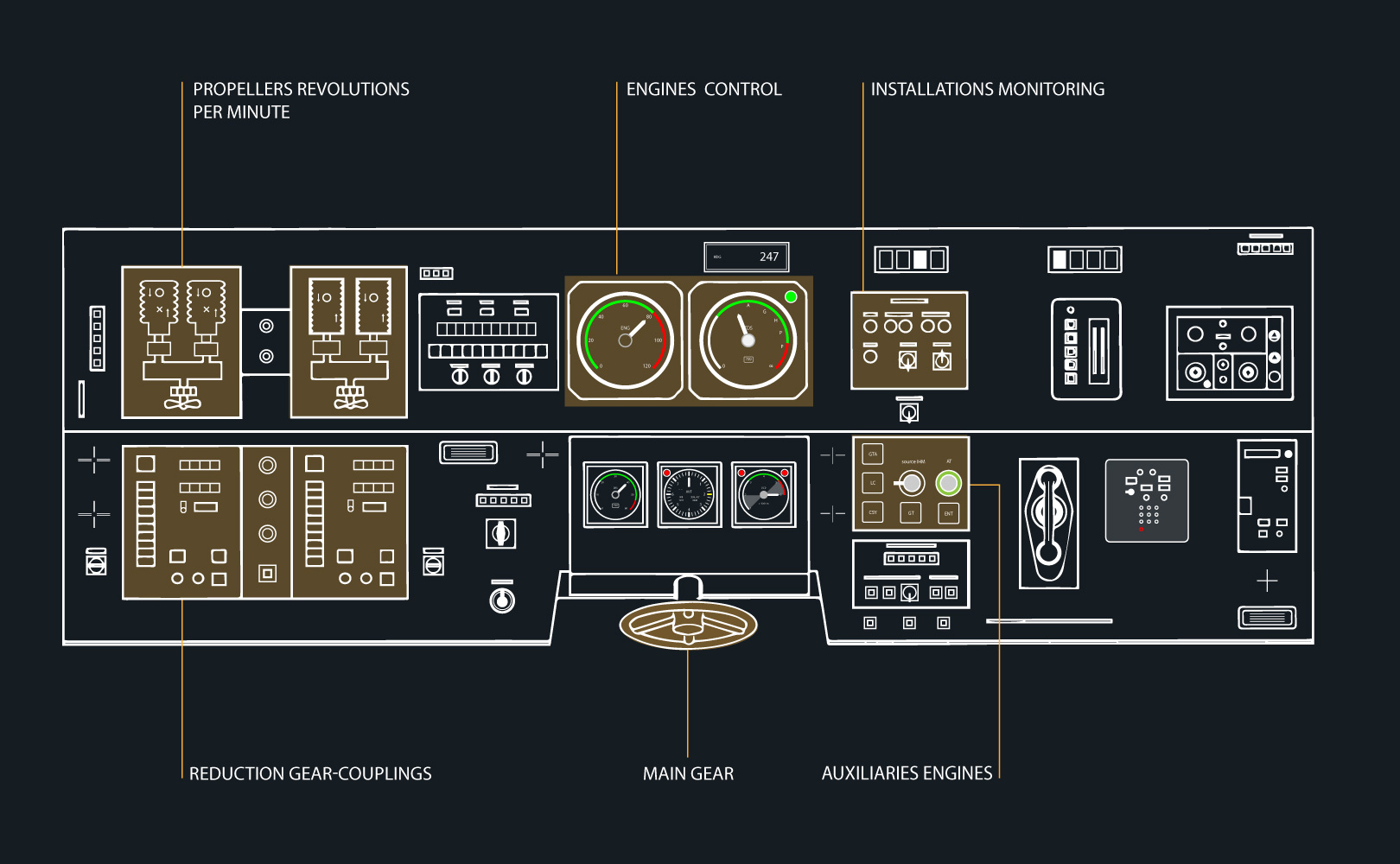
Fregat control panel
Tactical console
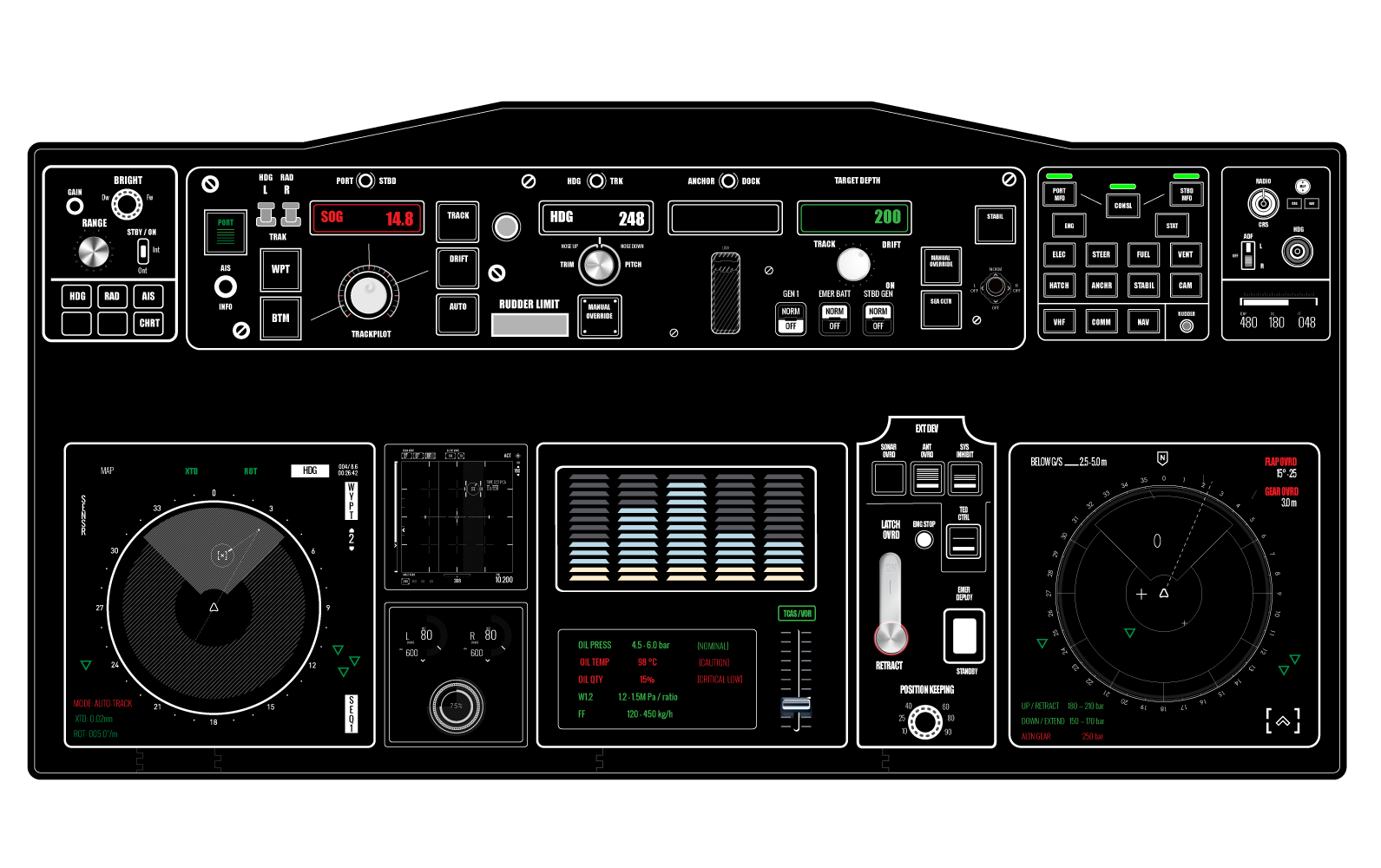
Integrated Bridge System
PROCESS / APPROACH
The design process focused on translating complex operational scenarios into clear, actionable interfaces for officers under high cognitive load.
Workflow
- — Researching the target audience (naval officers & bridge crews)
- — Development of nautical scenarios and interactive navigation steps
- — Prototyping high-fidelity IBS (Integrated Bridge System) consoles
- — Design iterations based on simulation-based testing and stakeholder feedback
KEY DESIGN DECISIONS
- ● Adaptive Navigation: Implementing Trackpilot modes to automate maneuvers and reduce steering errors.
- ● Tactical Data Layers: Using multi-function displays to toggle between radar and AIS without clutter.
- ● Predictive Safety: Focusing on CPA/TCPA metrics to provide early warnings before collision risks.
- ● Power Redundancy: Designing a simplified UI for generator control and immediate battery backup.
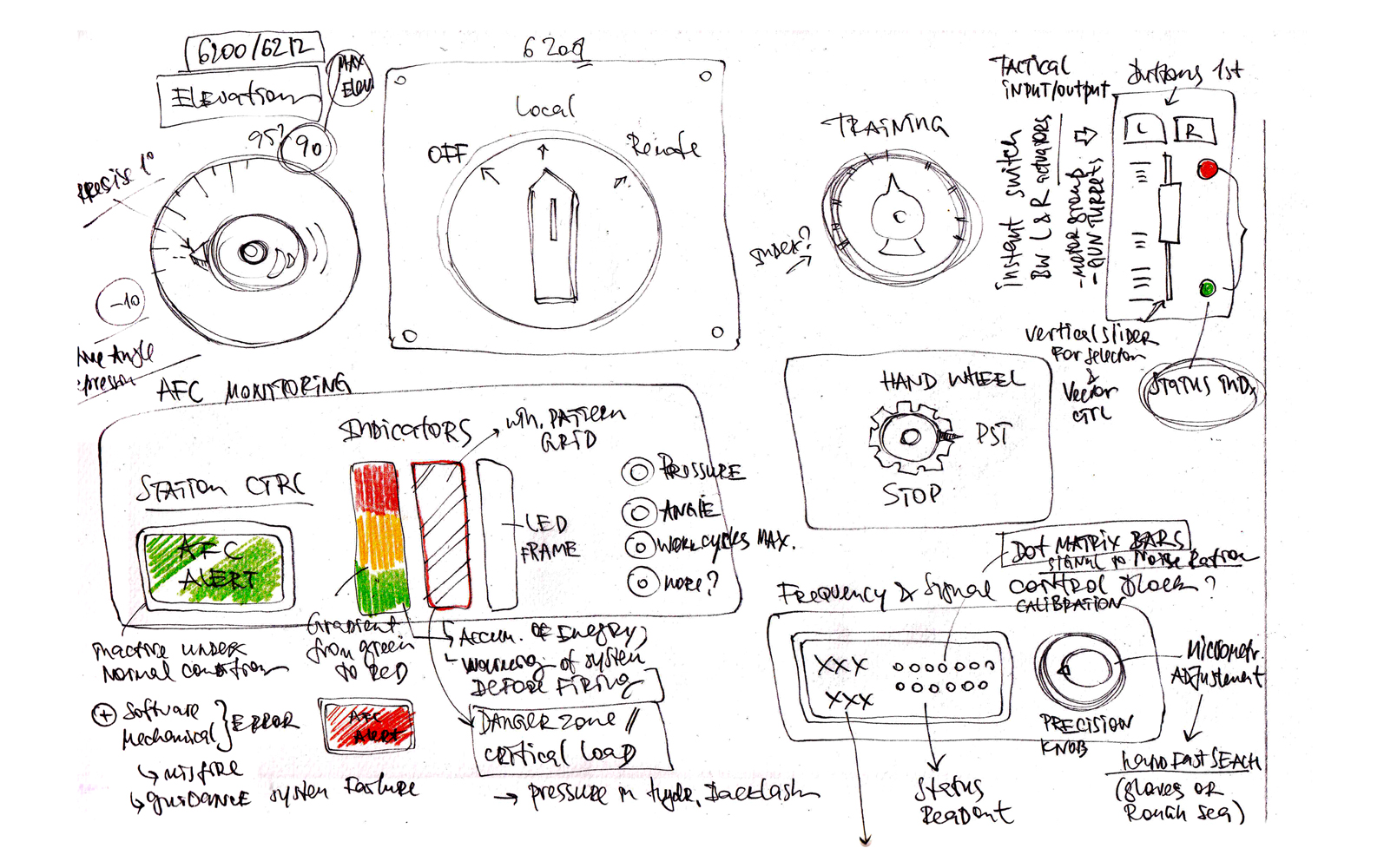
● Phase 01: Concept Sketch
● Phase 02: Mid-Fi Mockup
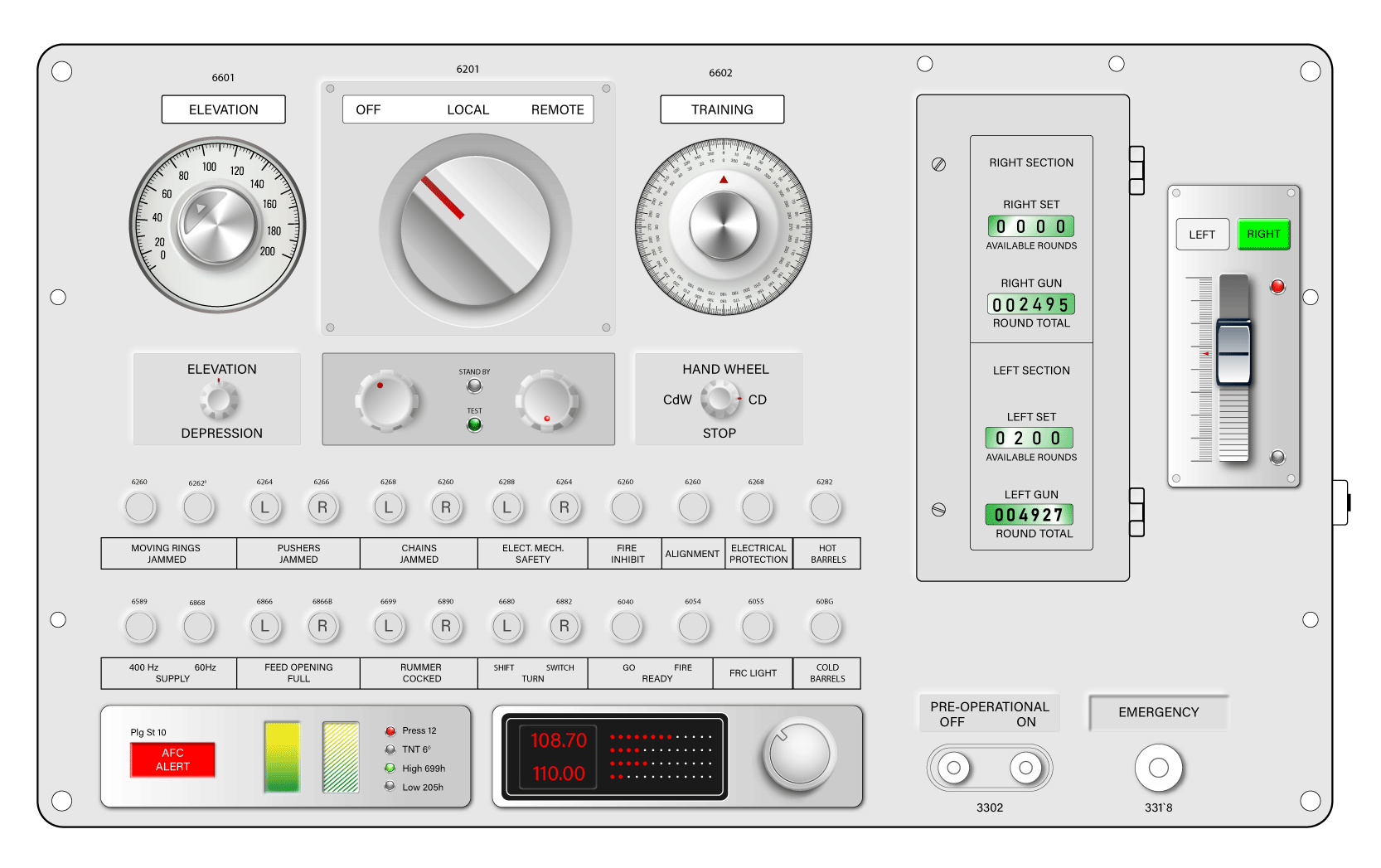
● Phase 03: High-Fi Render
OUTCOME
Efficiency Metrics
- 01 Focus: Reduced time needed to scan critical data (based on internal evaluation)
- 02 Cleanliness: Enables faster reaction to system issues in critical (alarm) scenarios
- 03 Usability: Clear “sterile” design optimized for low-light environments
Operational Value
- The platform has been accepted and is integrated into the official training process
- Training has become more structured, accessible, and intuitive for new operators
- The final design meets strict safety protocols and corporate brand requirements
User-Centric Metrics
Impact Metrics
Integrated Command & Control Console
This console is a hybrid workstation where the digital interface is integrated with physical controls. The design is focused on situational awareness and maximum responsiveness in extreme conditions.
Logical Information Architecture
The panel infrastructure is built on the principle of
symmetrical redundancy.
The left side is responsible for mechanical energy transfer, the centre for
manoeuvring, and the right for life support and energy autonomy. This division
of zones eliminates confusion in stressful situations when an officer needs to
instantly switch from speed control to safety system checks.
Integrated Bridge System
The IBS serves as the vessel's primary intelligence hub, orchestrating navigation, propulsion, and tactical data into a unified multiscreen environment. It is engineered to transform complex sensor streams into actionable insights, ensuring the bridge team maintains a 360° tactical advantage.
Data Fusion & Cognitive Ergonomics
The interface layout follows a "layered intelligence" approach. Critical navigation telemetry (Heading, SOG, Depth) is anchored at the top for instant scanning, while the lower modules provide high-fidelity visualization of radar, engine health, and sub-surface status. This hierarchy prevents information fatigue during high-intensity operations.
External contours and ship dynamic
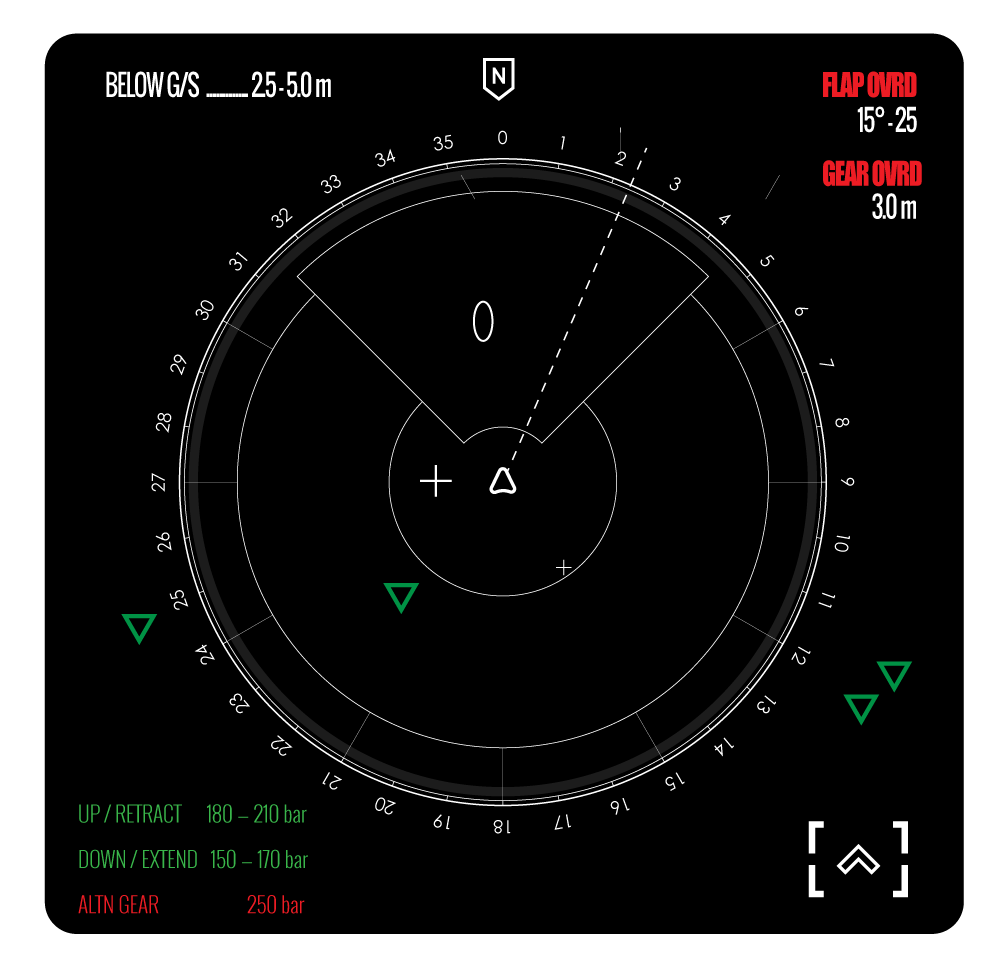
Ocean Going Vessel
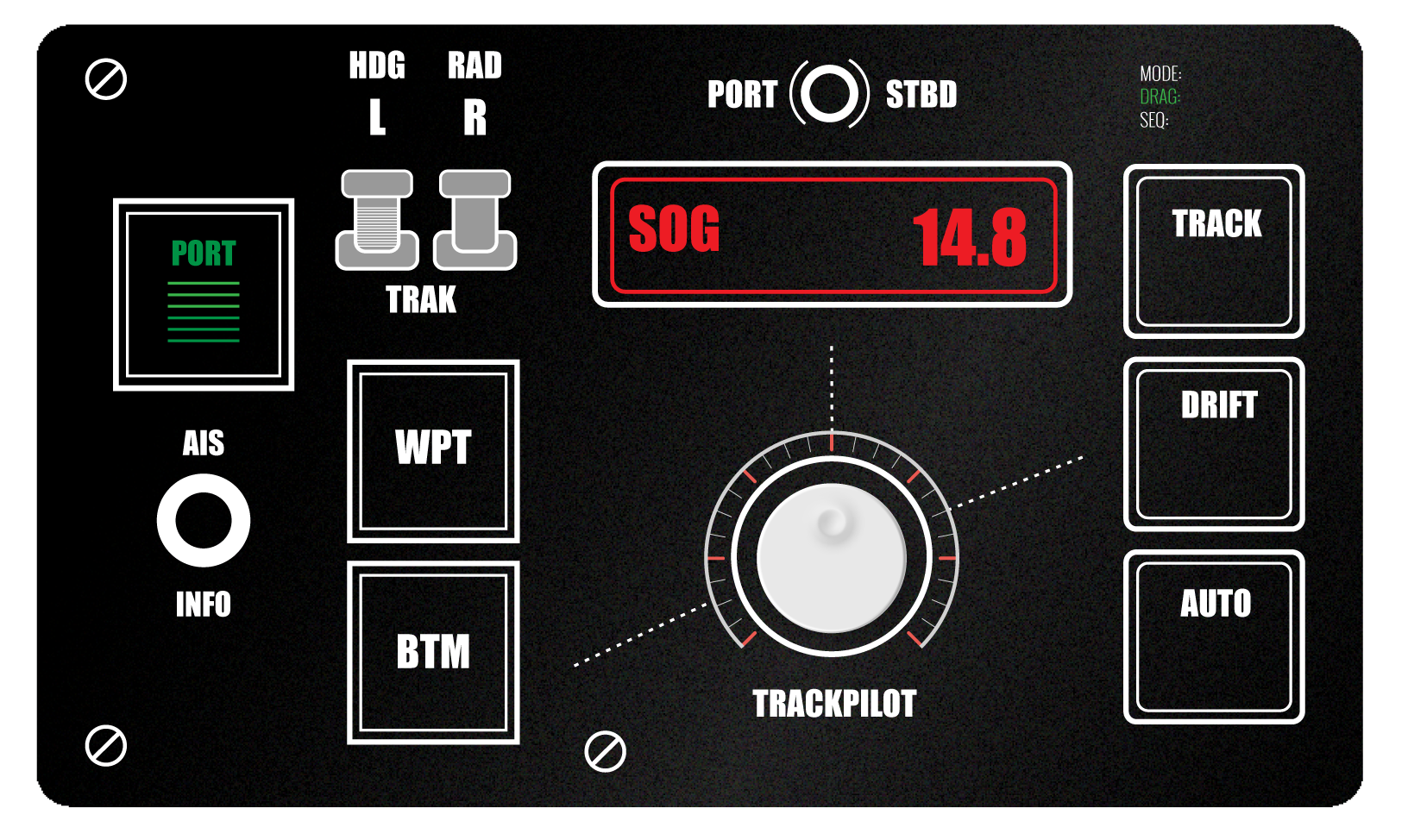
EICAS_ECAM