Case studies
Scientific data
Complex interfaces
INTEGRATED BRIDGE SYSTEM & TACTICAL CONTROL
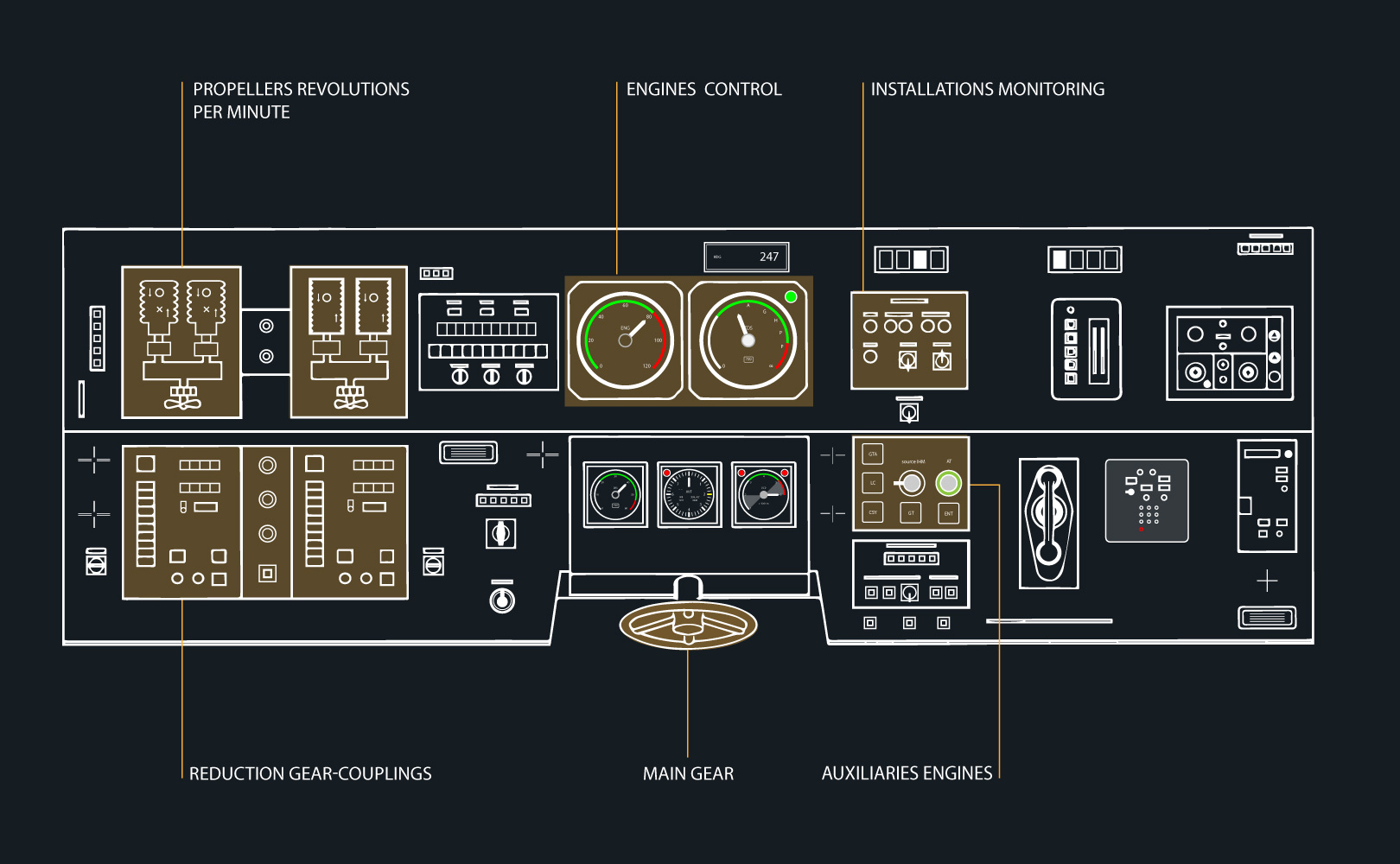
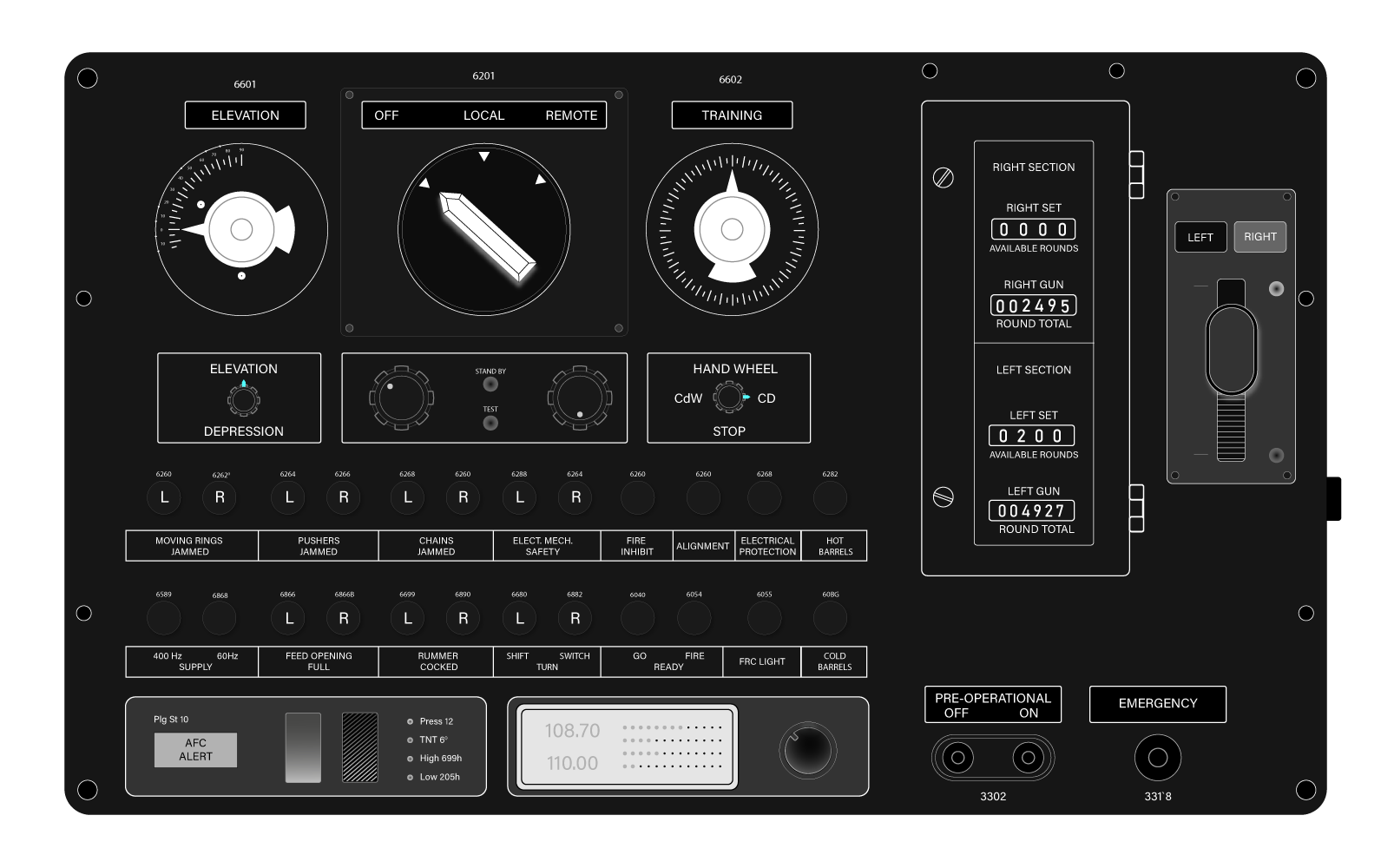
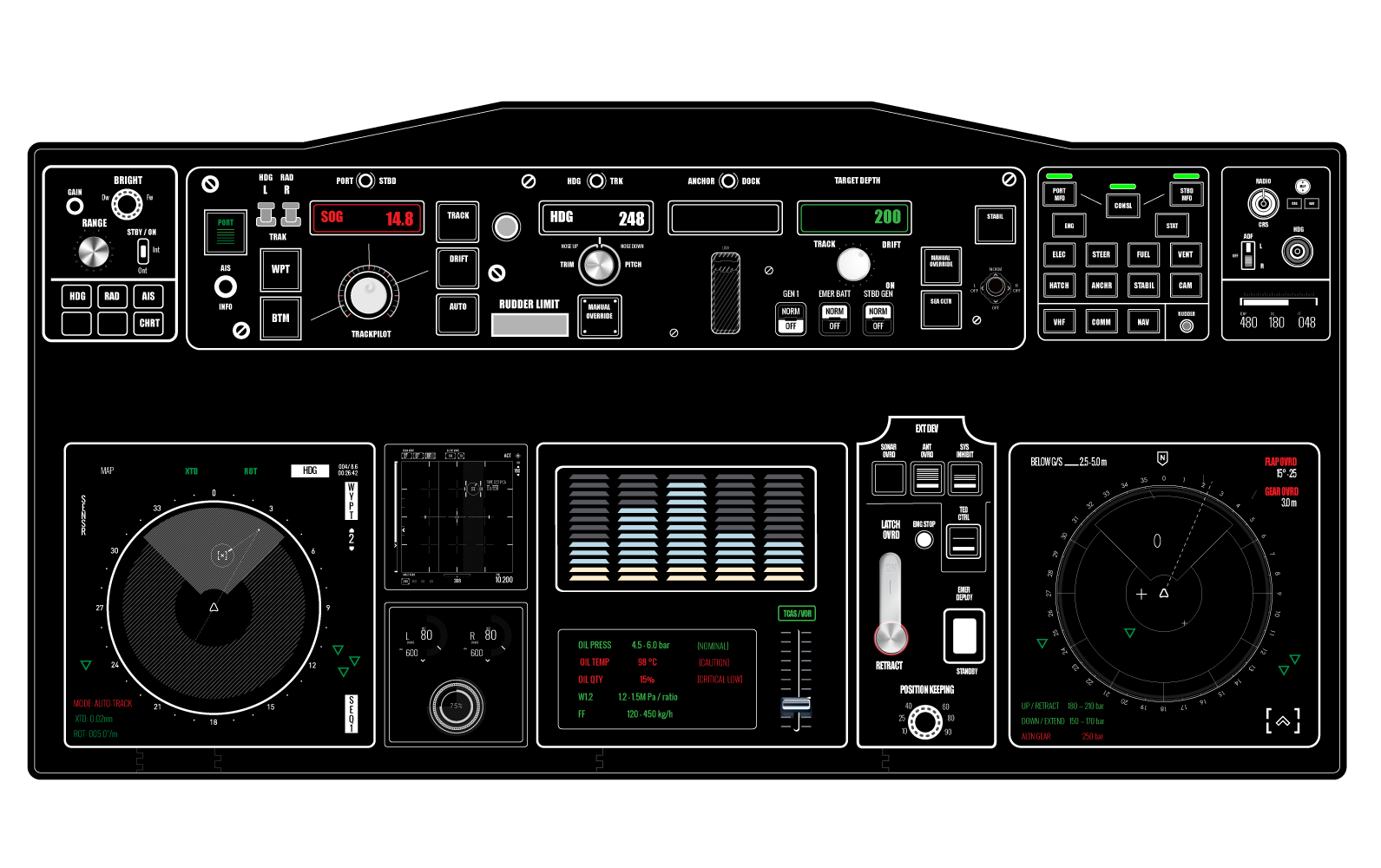
Here are some samples of my work in E-learning design for maritime systems. Creating the interface mockup of a Bridge Control Board involved analyzing instrument placement, optimizing control layouts, and considering maritime ergonomics—progressing from hand sketches to a high-fidelity digital design.
I involve naval officers in my 'user testing' sessions to gather professional feedback and uncover new operational insights. This allows me to refine the design through those famous, crucial iterations. I find my professional satisfaction in precisely engineering and positioning every key element, from analog gauges and toggle switches to complex tactical displays
Fregat control panel scheme
Tactical console
Integrated Bridge System
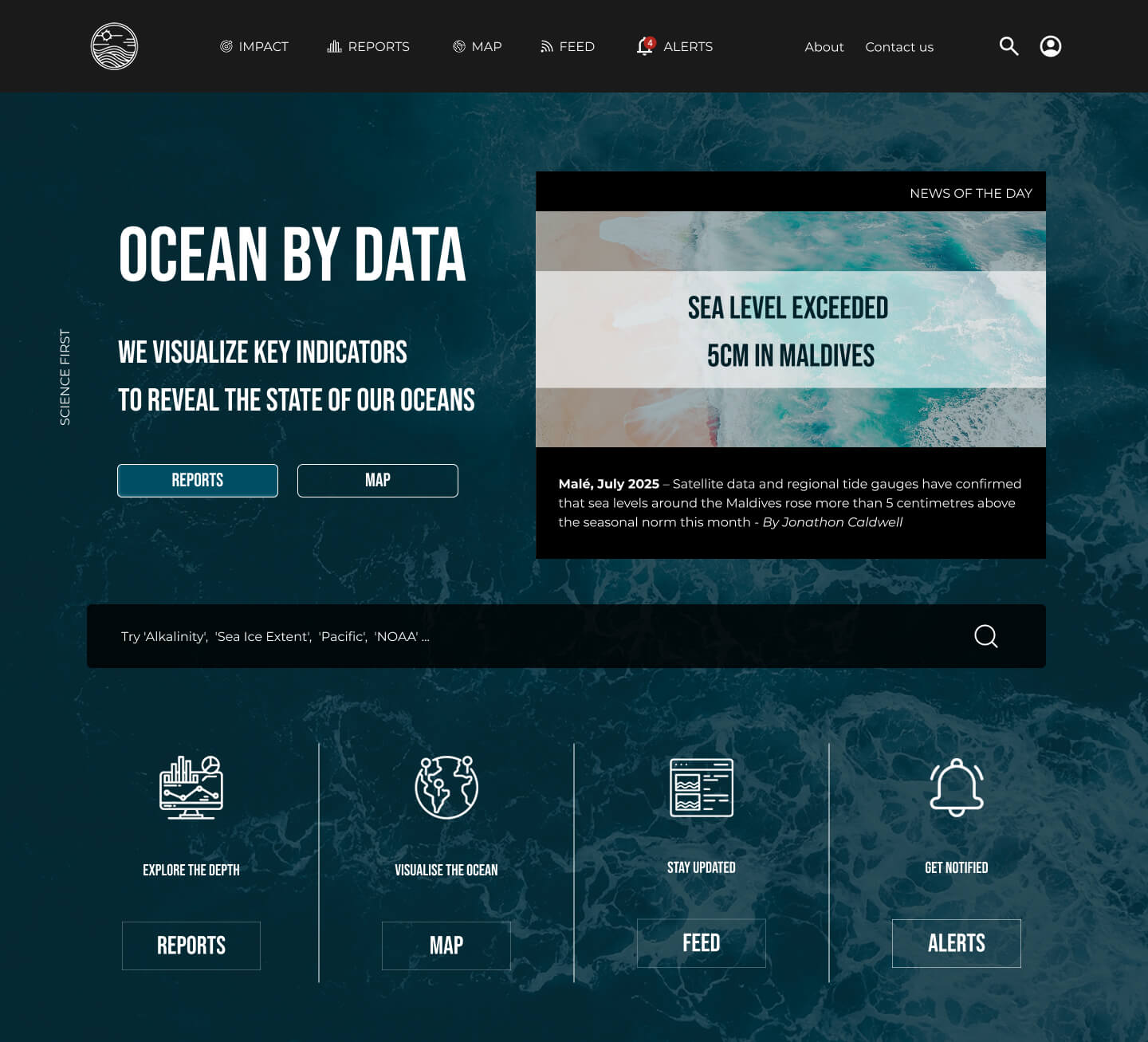
OCEAN by DATA
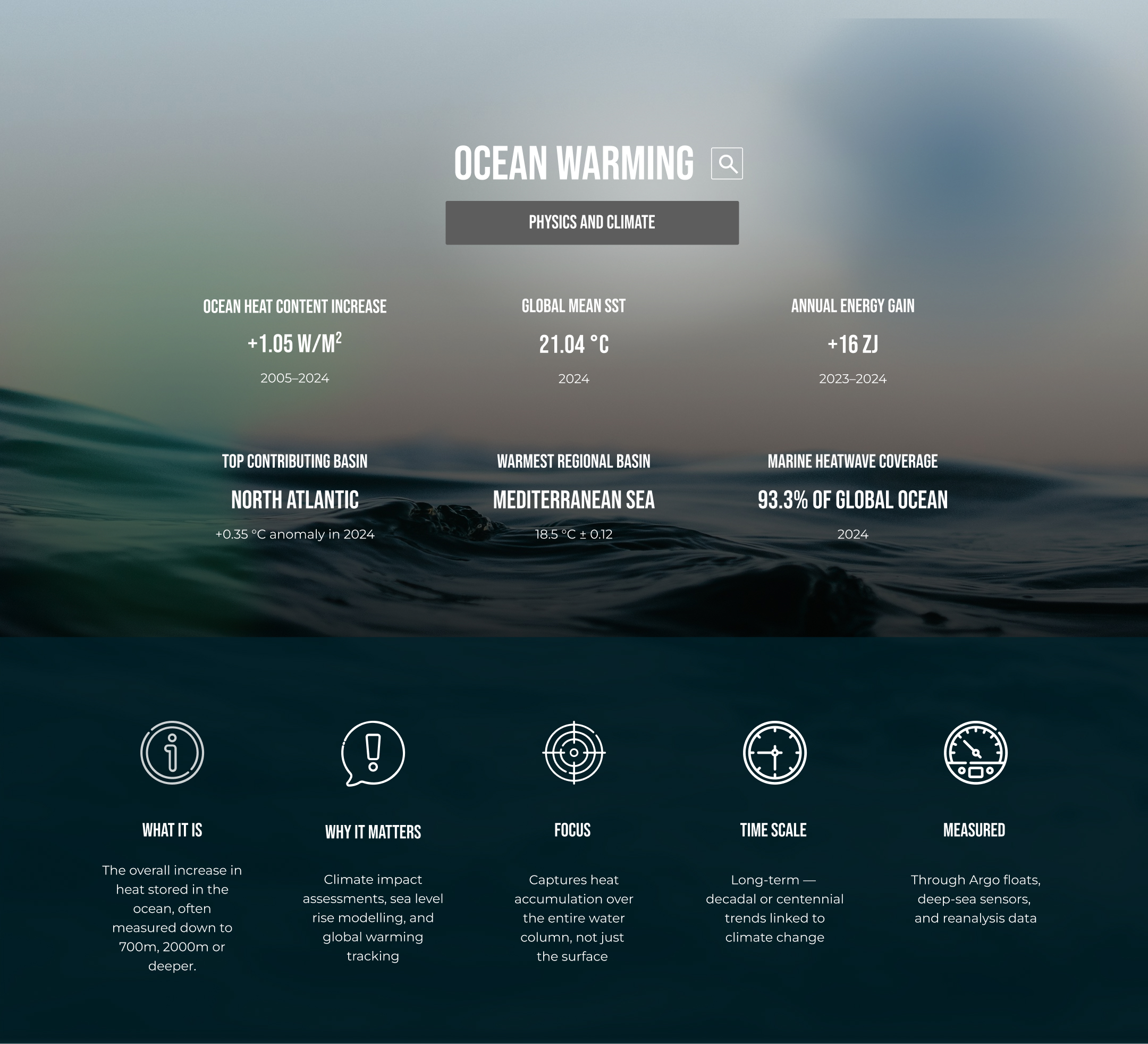
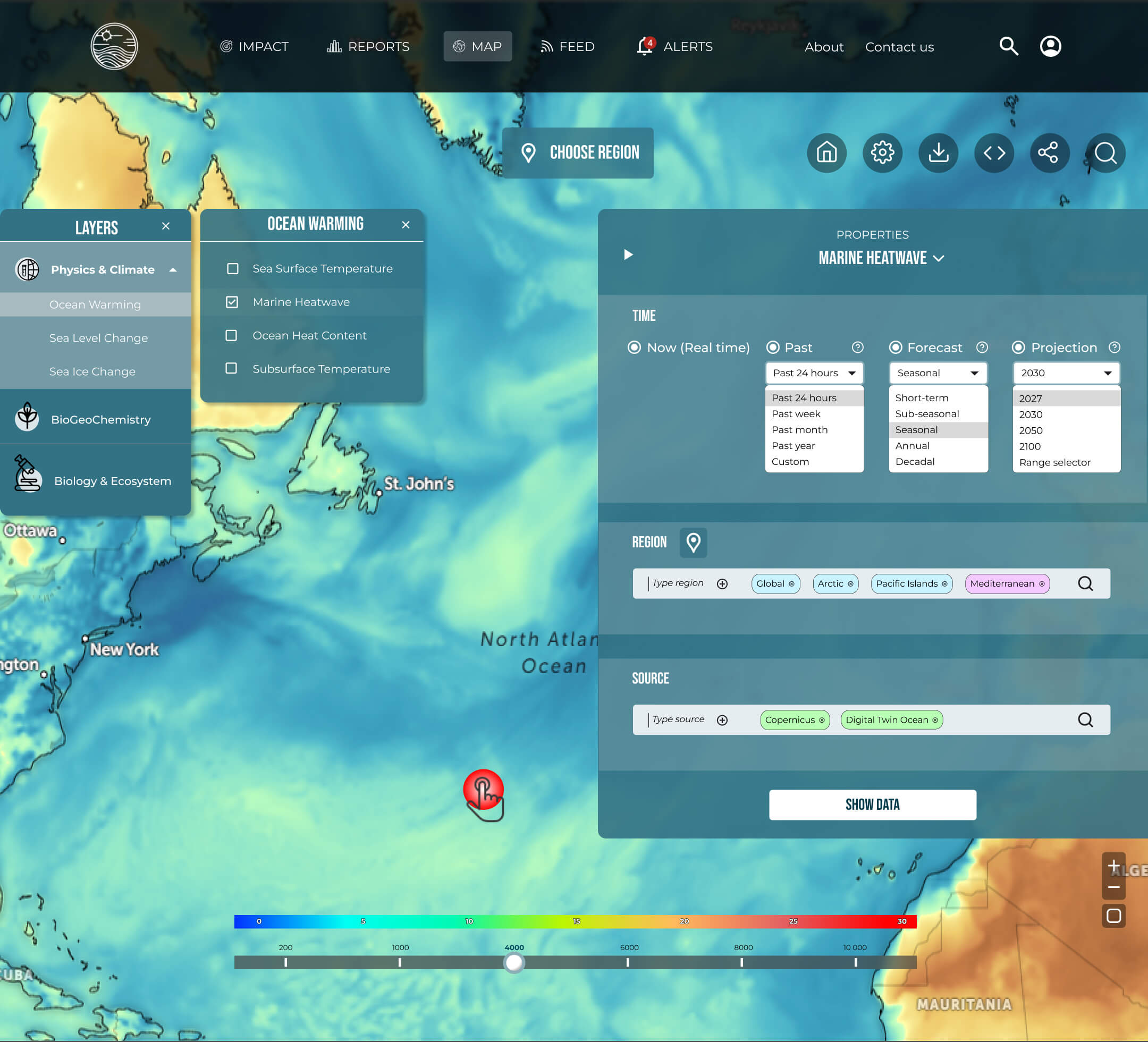
Ocean by Data is a platform for visualizing oceanographic data, integrating indicators (Sea Surface Temperature, Sea Level, Salinity, etc). The platform consolidates datasets from Copernicus Marine Service, EMODnet, and other sources into a structured system to analyze and interpret ocean data for policy-makers, scientists, and public stakeholders. Developed with Toulouse School of Economics, Mercator Ocean, and ObsSea4Clim, funded by the European Union.
The goal of ObyD is not only to display numbers, but to help users answer practical questions:what is changing, how unusual it is, where it is changing, and why should we care. To do that, I organized the experience around a few core principles: clarity for non-specialists, scientific integrity, and traceability. The result is a design that blends monitoring and explanation: users can see the current state, put it into historical context, explore anomalies and events, and connect ocean change to societal impacts.
Landing page
Reports
Map
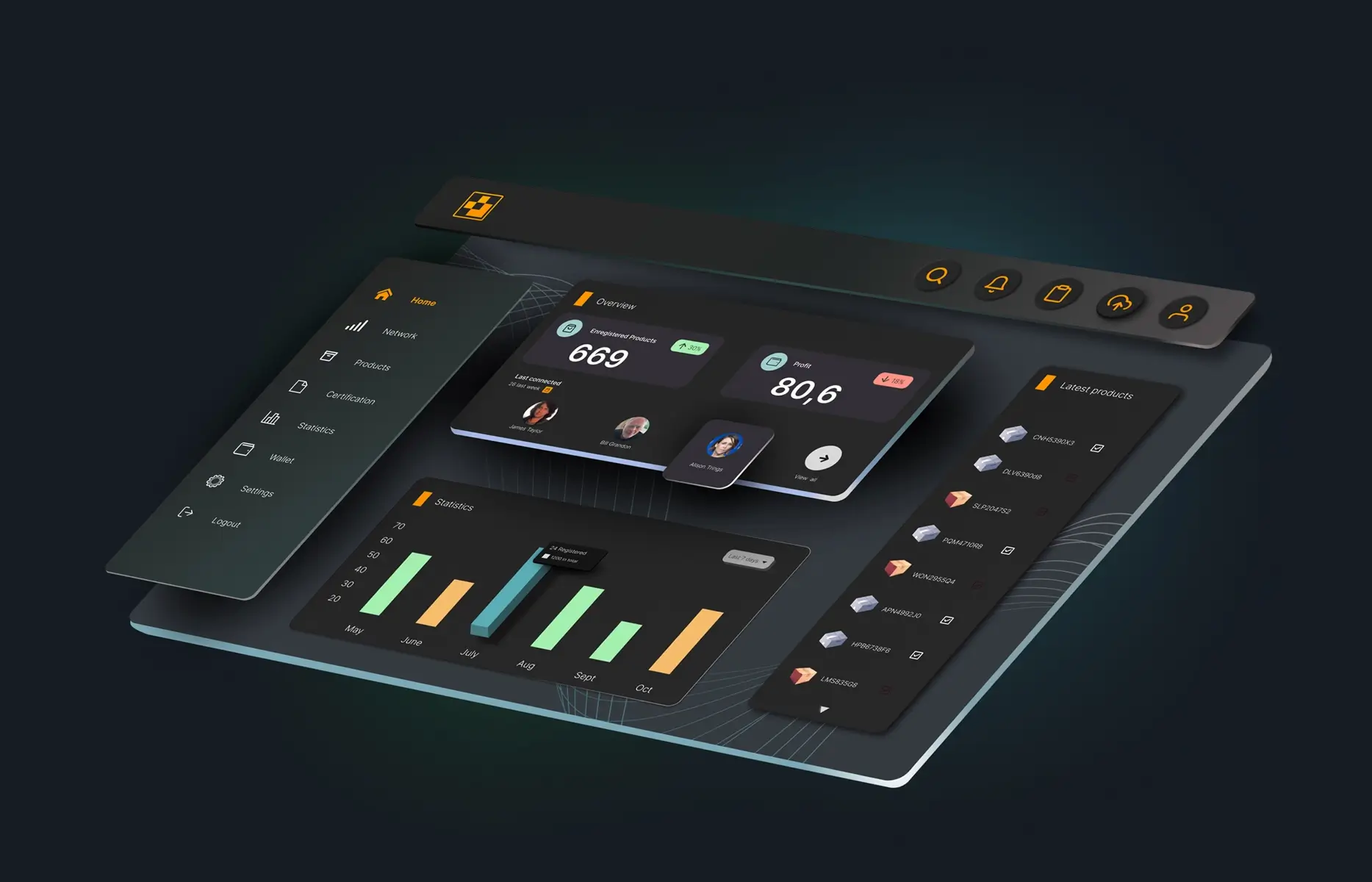
VerifyHub Saas PLATFORM
VerifyHub is an all-in-one web platform for multilevel product line
management, real-time
statistics, certification tracking and comprehensive reporting.
I had to turn detailed
product data,
statistics, certifications and millions of its settings into a clear tool that’s easy to
navigate without losing
depth.
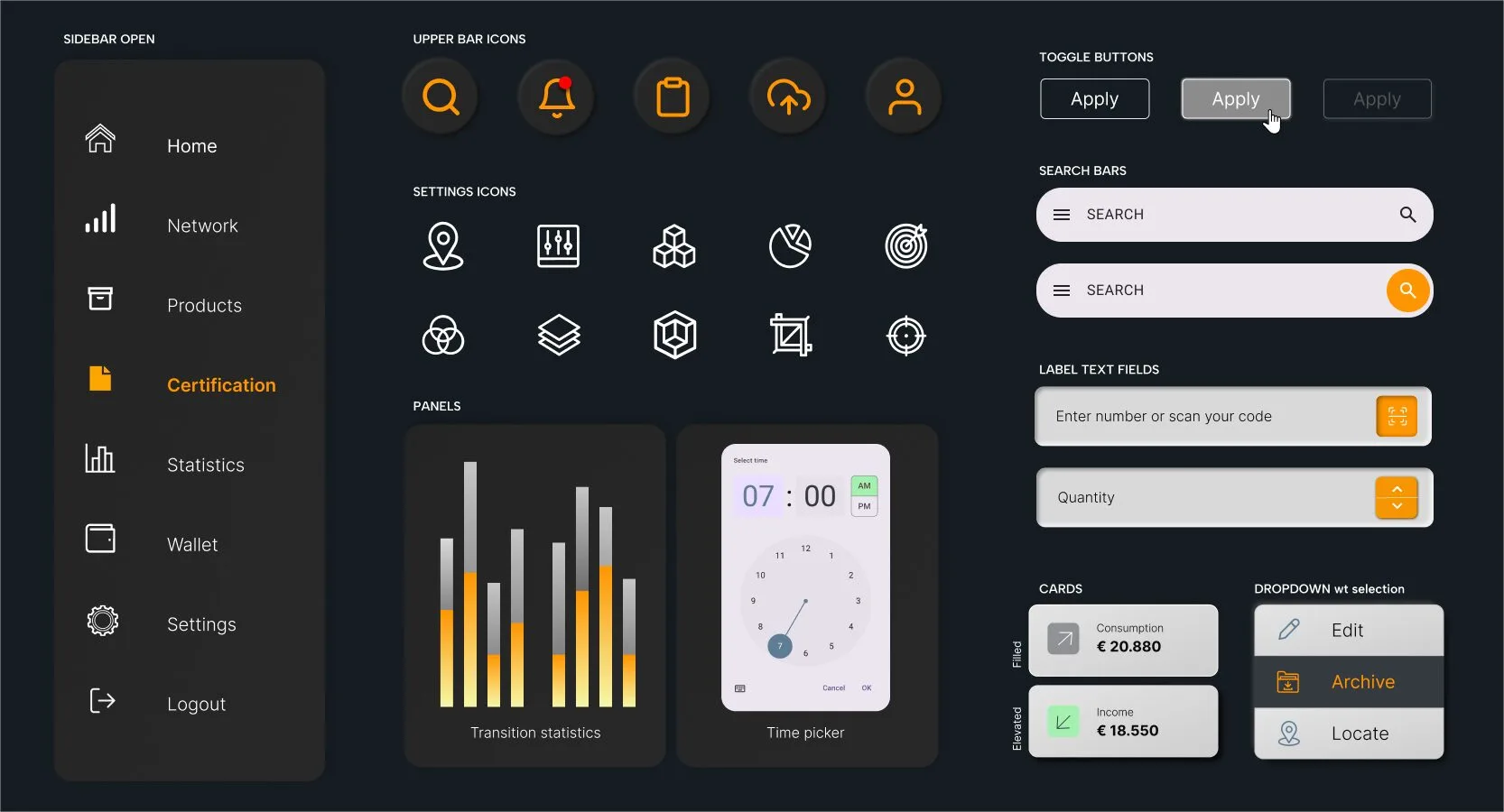
UI Elements
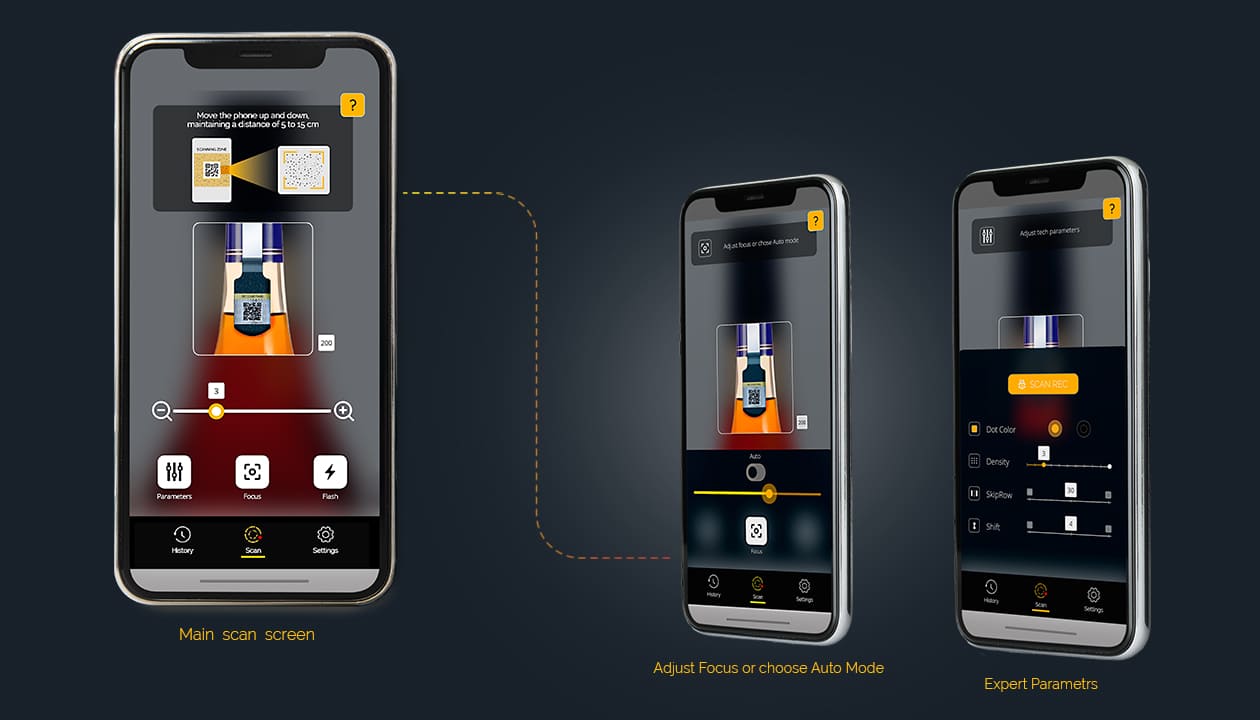
SCAN APPLICATION
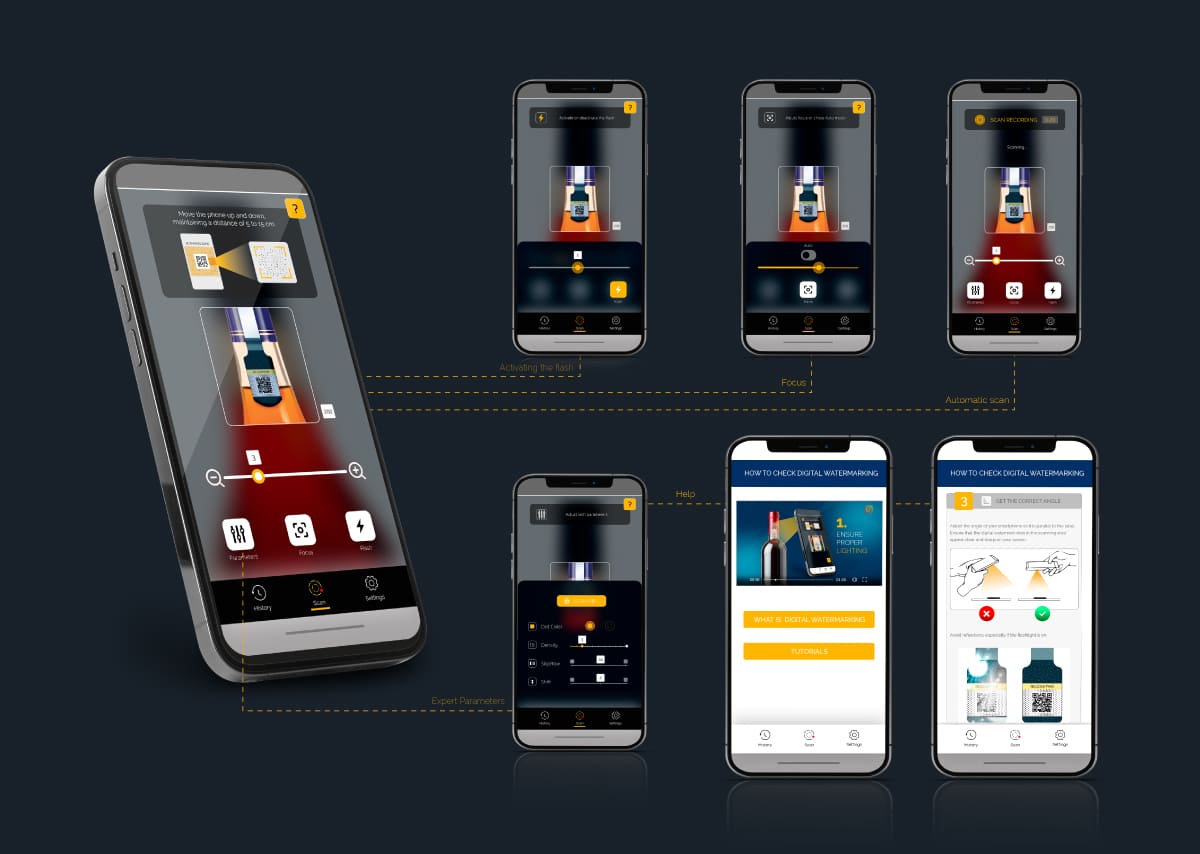
At first glance, developing a scanning application may seem straightforward. However, the process is often filled with unexpected challenges and complex decision-making. I needed to integrate multiple functionalities within a single screen while ensuring a right UX.
My task was to design an intuitive UI, to craft a comprehensive help section with clear documentation, and to produce a detailed tutorial video to guide users through the application’s features. It was tough, but inspiring, I must say.
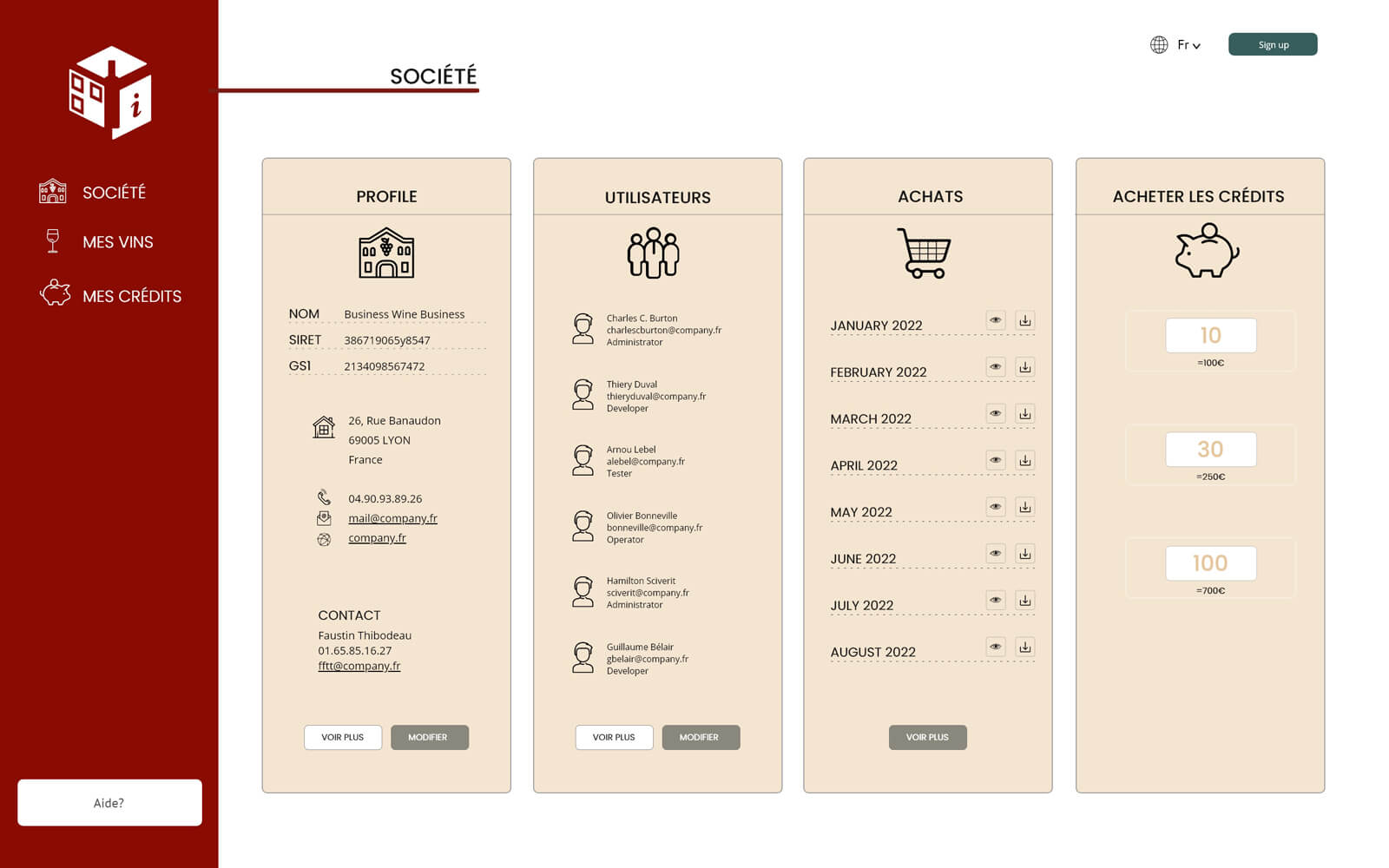
QR NUTRY DIGITAL LABELING PLATFORM
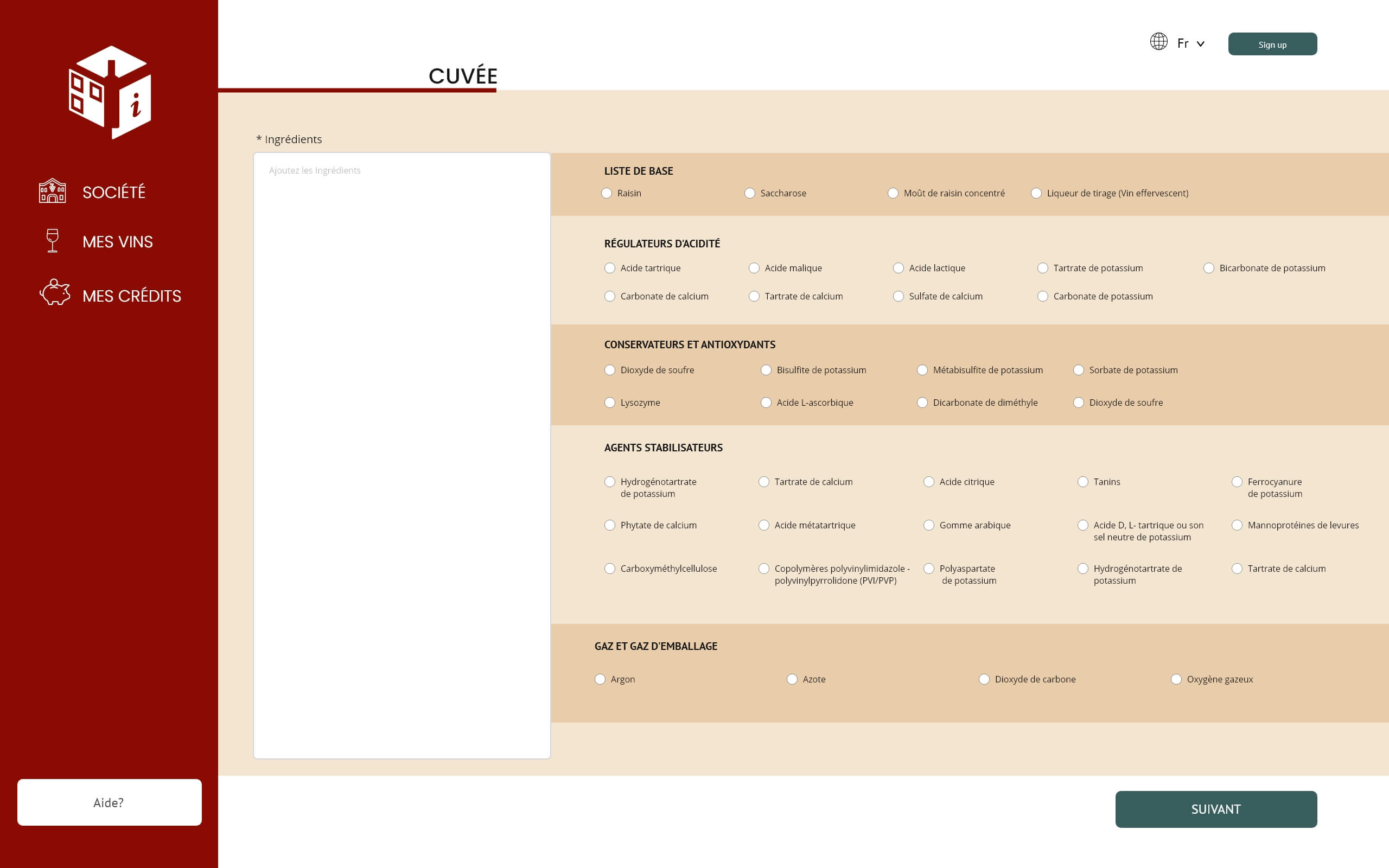
QR Nutry is an automated B2B SaaS platform for digital wine labeling, compliance management, multi-language data distribution, and dynamic QR-code tracking.
I transformed complex EU regulatory requirements and fragmented laboratory data into a centralized infrastructure
that ensures verifiable legal compliance and integrates directly into established winery production and labeling workflows.
Mobile

Company page
Vintage Ingredients page
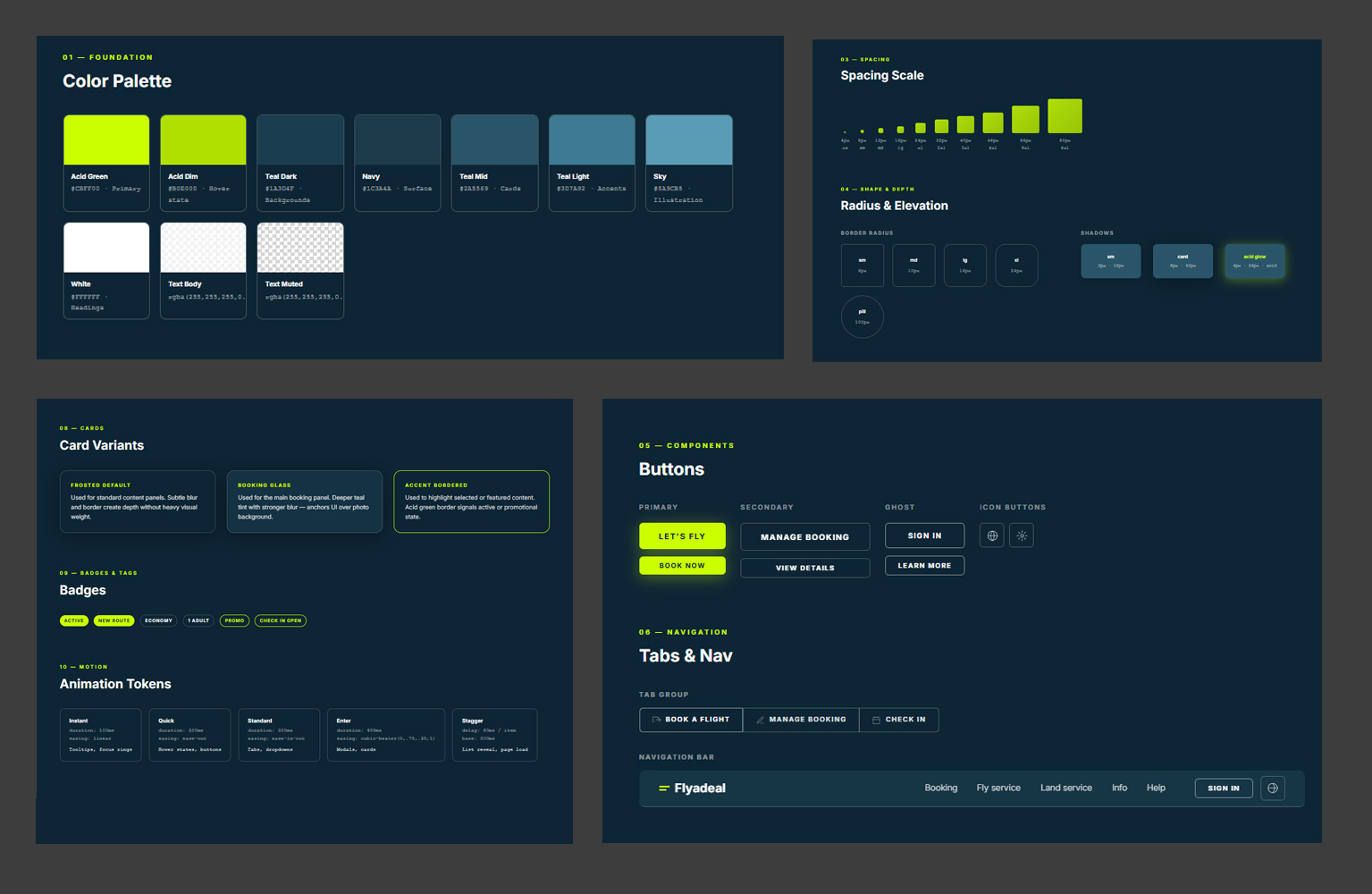
FLYADEAL INTERFACE REDESIGN
Context: Technical proposal for the restructuring and redesign of the Flyadeal airline booking platform.
Scope: Information Architecture audit, UI system refactoring, and booking flow optimization.
Role: Usability Analyst, UI Designer
The audit identified critical friction points: non-scalable raster assets, inconsistent layout grids, and a primary navigation structure that prioritized promotional content over core transactional tasks. Typography and color gamuts lacked sufficient contrast for accessibility standards, and embedded text within media assets impeded SEO indexing.
Outcome: The redeign resulted in a data-driven interface with reduced click-depth. Technical improvements in asset management and layout consistency stabilized the user journey, allowing for a more efficient path from flight search to checkout without structural distractions.sfgnsfgnsfgnsfgnsfng
Visual guide
Header

Serives Section